Research
My interdisciplinary research in global contemporary art and visual cultures combines art history, visual and cultural studies, gender and performance studies, decolonial methods, as well as philosophy, media archeology, and anthropology.
Current research projects:
Performative Walls: Street Art, Social Media, and Decolonization in 21th-century Social Protests
Description (click here to know more)
(Image: A mural in Bogotá. Photo by Lulo Colombia)
This interdisciplinary project combines art history, visual and performance studies, and decolonial and postcolonial studies. It analyses street art as an expanded visual and performative practice that engages virtual walls (social media), social feedback dynamics, artivism, and land social (including indigenous) movements in Colombia over the last decade. I discuss street art as an expanded visual and performative practice concerning public space, artivism, collective memory, old and new media, and social and indigenous movements in the last decade. This project involves a in-progress book, articles published or in process, and invited talks and papers:
- In-progress book: Performative Walls: Street Art and Social Protest
- 2026. “Review of Voices in Aerosol: Youth Culture, Institutional Attunement, and Graffiti in Urban Mexico by Caitlin Frances Bruce”, Panorama: Journal of the Association of Historians of American Art 12, no. 1 (Spring 2026), https://doi.org/10.24926/24716839.20970.https://journalpanorama.org/article/voices-in-aerosol/
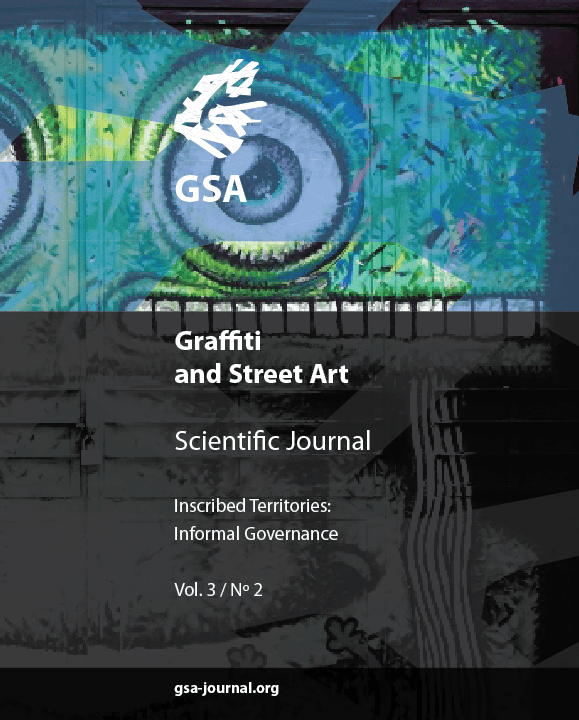
- 2025. “A Mural-Graffiti in Medellín: Fighting for the territory” Graffiti and Street Art 3(2): 48-63. Special issue: “Inscribed Territories: Informal Governance”. https://doi.org/10.48619/gsa.v3i2.A1250
- 2025. Talk. Performative Walls: Street Art and Decolonizing Heritage: A Case in Popayán. Art History & Visual Culture Studies forum, University of Nevada. December 2.
- 2025. Paper: Decolonizing Heritage: Multi-vocal, Intergenerational, Intercultural Actions on the Tulcan Pyramid. International Conference Decolonising Cultural Heritage, University for Foreigners of Siena. May 5-7.
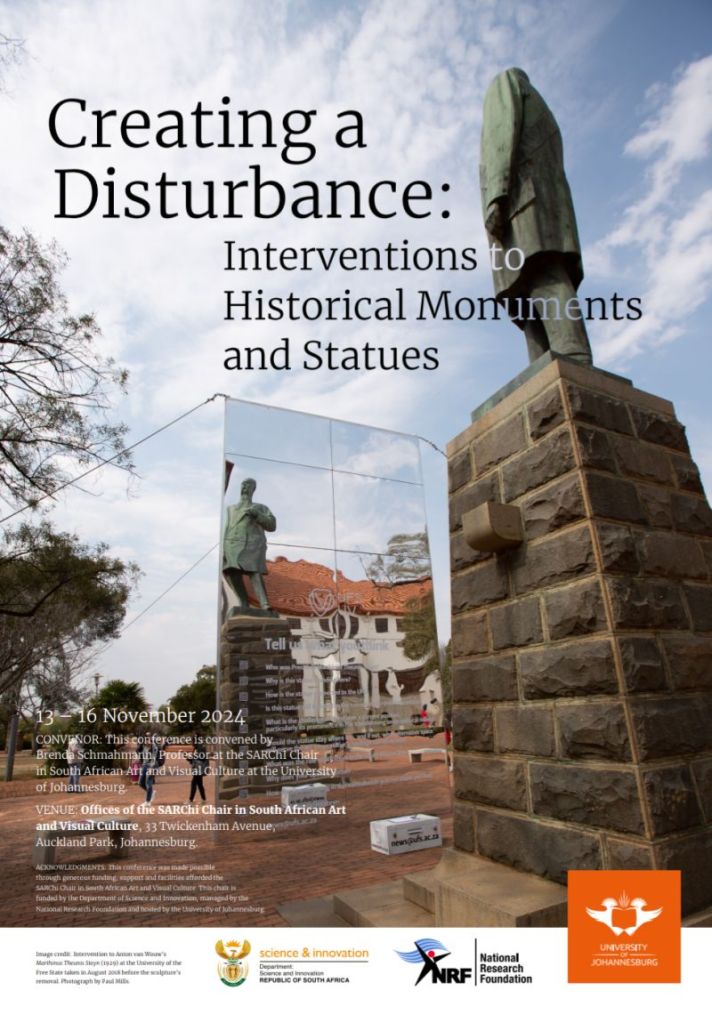
- 2024. Paper: Decolonizing Heritage, Culture, and History: Visual and Performative Interventions in Popayán. Creating Disturbance Conference. University of Johannesburg.
- 2024. “Music and Protest”. Music Art and Social Movements. UNR and Holland Project. February 28.
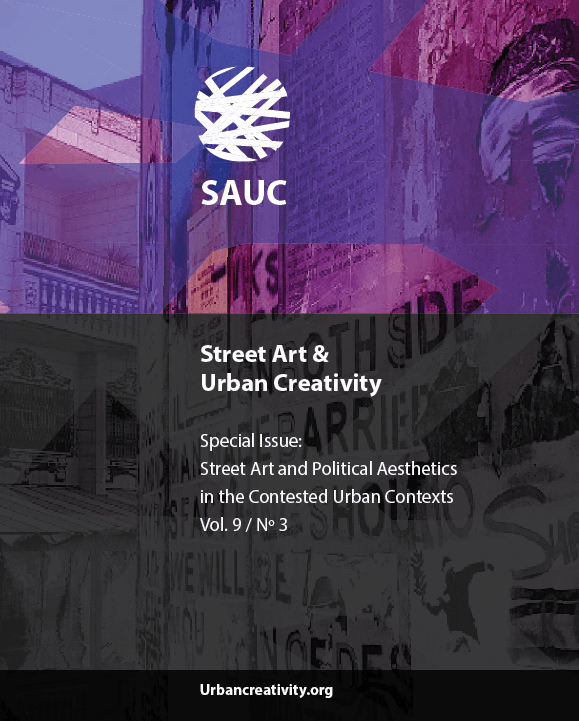
- 2023. “Activism, Textuality, and Feedback in La nueva banda de la terraza’s Graffiti-Projections.” SAUC – Street Art and Urban Creativity, 9(3): 8-22. J https://doi.org/10.25765/sauc.v9i3.803
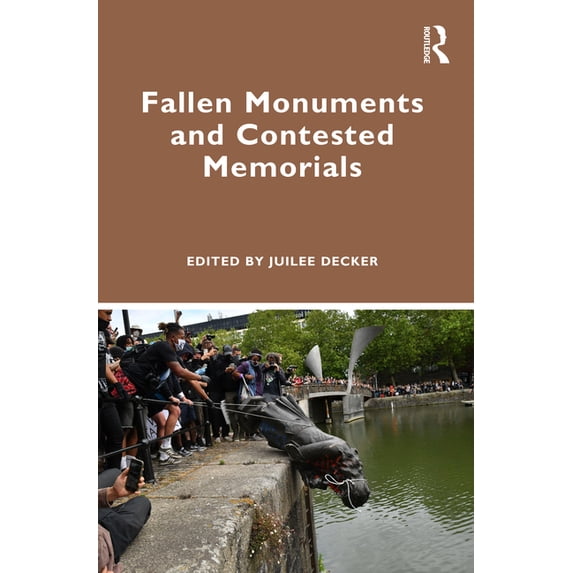
- 2023. A decolonial fall on the Tulcan Hill: Between recasting public memory and place, and recovering history and commemoration”. In Fallen Monuments and Contested Memorials. Edited by Juilee Decker (Rochester Institute of Technology). Publisher: Routledge. ISBN 9781032183718. https://doi.org/10.4324/9781003256076
- 2023. Paper: “Street Art, DIWOY-O and Direct Action in 2021 Cali’s Social Outbreak”. 6th International ART and the CITY Conference, Max Planck Institute for the Study of Religious and Ethnic Diversity, 3-5 June.
- 2022. Viral Street Art in Bogota: Contesting State Violence and Engaging Citizenry”. 5th International ART and the CITY Conference, Aarhus University, 23-25 JuneColonial Afterlives: Public Art and the Trans-Pacific World.
Mapuche Futurity in Anita Paillamil’s textiles and activism
Description (click here to know more)
(Image: Guillermo Bert, in collaboration with Anita Pallamil, Redemption (2012) Wool with natural dyes (ñimin technique). Museum of Arts and Design New York, © Guillermo Bert)
Paillamil is a Mapuche master weaver and leader in recovering and reinventing Mapuche textile traditions that have been partially forgotten due to acculturation. The scant commentaries on her work solely refer to her participation in Guillermo Bert’s Encoded Textiles, and emphasize the visual insertion of ‘Aztec codes’ (i.e., scanned data matrix barcodes) on Mapuche textiles, while assuming textiles and the weaver as passive actors, leaving aside Paillamil’s poetic, conceptual, and contemporary reformulation of the Mapuche visual tradition. Through a careful visual and contextual analysis, in addition to interviews, I adopt visual, feminist, and indigenous studies to discuss how her work invites consideration of nesting and gestating the past; envisioning Itrofill mogen (“all life without exclusion”) and küme mogen (“the right to freedom and happiness”); and interconnections between weavers, visions, healing, life, and ethics. This project includes the following products:
- 2027. “Resistant, Poetic, and Visionary Weaving in Anita Paillamil and Guillermo Bert’s Contribution to the Mapuche Decolonial Struggle in Encoded Textiles” Latin American and Latinx Visual Culture 9 (1). In Press.
- 2026. Paper. “We have the same needs as the tree: Mapuche art and poetry and the struggle for heritage and conservation”. Taking Root: Conserving Trees and/as Heritage, Department of Art History. University of Vienna. October 28-30.
- 2026. Talk. “A Touching Vision and Inquiry: Mapuche Decolonial Care in Conditions of Coloniality”. Institut für Kunst in gegenwärtigen Kontexten und Medien, Katholische Privat-Universität Linz. October 27
- 2026. “Mapuche Portal #3. Anita Paillamil and Guillermo Bert’s poetic and decolonial reformulation of Mapuche textiles”. Source: Notes in the History of Art 45 (4).DOI: 10.1086/743468
- 2025. Talk. Resistance, Poetry and Intersectionality in Visionary Mapuche Textiles: The Mapuche Master Weaver and Leader Anita Paillamil. University of Nevada-Reno. December 4.
- 2023. Talk. Guillermo Bert’s Encoded textiles. Nevada Museum of Art. December 8.
Em/Dis-Bodiments: Cultural Trauma and Contemporary Photography and Video
Description (click here to know more)
(Image: Runa Islam, Emergence (2011). Film-still)
This long-running project examines photographic and video works by artists and photographers from the Global South who use transcultural imagery to engage with cultural trauma and its decolonization. Decolonialization of cultural trauma is a debate that has developed over the last ten years in literary studies, with an emphasis on narrative and plot. Unfortunately, it still needs to be developed and understood in art history and visual studies, attending to colonial archives, embodiment, rituals and subversions, and its deep intercultural and ecological roots. This project involves a book, several articles and invited talks:
- In-progress Book: Em/Dis-Bodiments: Cultural Trauma and Contemporary Photography and Video.
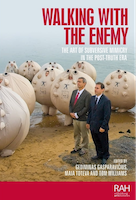
- 2026. “Samuel Fosso’s Masquerade: History, Colonial Trauma, and Healing in Emperor of Africa.” In Walking with the Enemy: The Art of Subversive Mimicry in the Post-Truth Era. Series: Rethinking Art’s Histories. Edited by Tom Williams, Gediminas Gasparavicius, and Maia Toteva, 355-371. Manchester: Manchester University Press. ISBN 9781526169488. https://www.jstor.org/stable/jj.45369516.21. [Buy at Manchester U Press] [Excerpt in Academia]. [Ask me for a personal copy]
- 2020. “Runa Islam’s Emergence (2011): Reproducing and projecting Antoin Sevruguin’s negative in a time of uprisings.” Cinergie, il Cinema e le altre Arti 17: 31-42 https://doi.org/10.6092/issn.2280-9481/10521
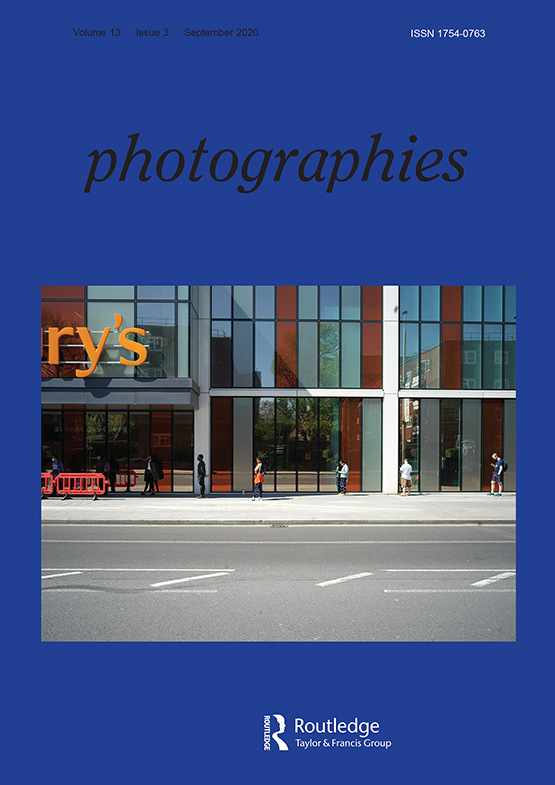
- 2020. “Alberto Baraya’s Decolonial and Posttraumatic Photography: Displaced Difference within Trauma Culture.” Photographies 13.3: 341-364. https://doi.org/10.1080/17540763.2020.1774920
Nayda Collazo-Llorens’ Abstraction: Queering Cartography and Diaspora
Description (click here to know more)
(image: Nayda Collazo-Llorens’ Geo Dis/connect 5 (2020). Wall installation with collected and printed maps and color paper)
The project on abstraction, disapora, and queerness in this Puerto Rican artist’s work includes the following products:
- 2026. “Sea Currents and archipelagic thinking in Nayda Collazo-Llorens’ queer and abstract experimentation.” Cuadernos de Música y Artes Visuales y Artes Escénicas 21(1): 186-209.
- 2026. “Nayda Collazo-Llorens’ Queering Video Work (2005-2012): A Journey Opening to an Archipelagic Perceptual Mesh.” Nuevos Horizontes. Special Issue “Visual Culture in Puerto Rico and the Caribbean”.
Atabi or dancing the lost present: A pioneering piece of indigenous dance-theater in Colombia
Description (click here to know more)
(Image: Cover of the theater magazine Actuemos, issue 8)
Atabí is the first indigenous dance-theater piece in the history of modern theater in Colombia. Based on Fernando González Cajiao’s text, Atabí is as a dance-theater piece.and adaptation and reappropriation orchestrated by Rosario Montaña Cuellar and Delia Zapata Olivella. Even if immediately celebrated, the piece soon had its presentations restricted due to tensions among the theater group. This research project reconstructs the play, design, costumes, and choreography. This project includes:
- 2026. Vanderbilt Library Travel Grant. Special Colombian collections. Vanderbilt University.
Previous research projects:
Geneses of Video and Women video makers: a media archeology of video in 1980s Colombia
Description (click on each to know more)
(Image: Sandra Llano-Mejía, In-Pulso (1978). Video-still)
This project analyzes innovative works by women artists who produced video in Mexico, Colombia, and the USA in the 1980s, and whose work has remained marginal in art-historical accounts. Rearticulating visual studies, media archaeology, performance, and (Latinx/Latin American) feminisms, I discuss how these artists seized on technology, proposed a heterodox approach to the history of video, and developed conceptual and historical articulations of media and gender in connection with and in response to TV. This project involves the following products:
- Book under review: Subverting the order: Women artists, video, and assemblages in the 1980s.
- 2023. “The Woman, the Migrant, the Cyborg in In-Pulso.” Writing Never Written: 2023 Art Writing Symposium. Nevada Museum of Art and University of Nevada-Reno. December 1.
- 2023. “García’s Juegos (1978-1979): puppets, immunity, torture.” In Ventriloquism, Performance, and Contemporary Art. Edited by Isabelle L. Wallace and Jennie Hirsh. Publisher: Routledge. ISBN 9781032290454. https://doi.org/10.4324/9781003303978
- 2022. “De Orfeo a las Ménades: hacia una videopoesía nómada en There is no forgetting de Margarita Becerra Cano [From Orpheus to the Menades: Towards a nomadic Video Poetry in Margarita Becerra Cano’s There is no forgetting].” Revista Chilena de Literatura 106: 487-513. https://revistaliteratura.uchile.cl/index.php/RCL/article/view/68784
- 2021. “De muertes, círculos, y manos: lo audiovisual en Circus (1989) de Margarita Becerra Cano [On Deaths, Circles, and Hands: The Audio-visual in Margarita Becerra Cano’s Circus (1989)]”. Calle 14: Revista de investigación en el campo del arte, 16(30): 392–407. https://doi.org/10.14483/21450706.18308
- 2020. “The Threefold topography of performance: Drawing, Action, and Video in María Evelia Marmolejo’s Anónimo 4.” TDR The Drama Review 64.4 (Winter): 129–146. https://doi.org/10.1162/dram_a_00968
- 2020. “Una utopía artística: juego y televisión en Personalmente T.Video [An artistic utopia: play and television in Personalmente T.Video].” Calle 14 Revista de Investigación en el Campo del Arte, 15(28). https://doi.org/10.14483/21450706.16278
- 2020. Keynote Speaker. “Seis obras y artistas: Videoarte en los largos años ochenta en Colombia [Six works and six female artists: Video art in the long 1980s in Colombia]”. Seminario Expresiones Artísticas del Videoarte y el Cine Experimental. Medellín, Colombia. October 23. http://www.intermediaciones.org/.
- 2020. “Video’s movements: Drifts and expansions of video art and video dance”. Central Coloquium of Dance, Universidad de Antioquia. Medellín, Colombia. September 7.
- 2018. Organization of an Internationl Event: Art and Medium(s) in Contemporary History of art. VIII Symposium of Art History. Universidad de Los Andes. Bogotá, Colombia. October 24-26. Two invited keynote speakers (Caroline Armstrong – Yale, and Andrew Uroskie – Stony Brook), eighteen international speakers, and two local speakers.
- 2017. “Ricardo Restrepo’s pioneering video art works”. Muestra Internacional Documental de Bogotá, MIDBO. Universidad Javeriana. Bogotá, Colombia. October 31.
The Body and the Ethic and Aesthetic Regimes of Violence
Description (click on each to know more)
(Image: Alberto Baraya, Observation of stigmata (1995). Photomontage)
This project involves the following products:
- 2015. Talk: “Silent or muted victims and witnesses? Paradoxes in Doris Salcedo’s artwork.” MCA Talk: Doris Salcedo Panel (Exhibition). Museum of Contemporary Art Chicago and DePaul University. Chicago (IL), USA. April 7.
- 2015. “Corte de florero, simulacros y testimonio de la violencia [Flower cut vase, simulacra and testimonies of violence].” In Pensar el arte hoy: El cuerpo, edited by Carlos Sanabria, 174-191. Bogotá: Universidad Jorge Tadeo Lozano. ISBN 9789587251630. https://doi.org/10.2307/j.ctv2175p7q.13.
- 2010. “Emblemas, cuerpo y memoria colectiva [Emblems, body and collective memory].” In Premio nacional de crítica: ensayos sobre arte contemporáneo en Colombia, 111-136. Bogotá: Universidad de Los Andes and Colombian National Ministry of Culture. ISSN: 2145-59-10.
- 2010. “Cuerpos en dolor (I) imágenes emblemáticas del régimen ético de la violencia [Bodies in Pain (I): emblematic images of violence’s ethical regime]” In Revista de Estudios Sociales 35 (2010): 123-137. https://doi.org/10.7440/res35.2010.11
- 2007. Art Criticism National Prize: “Unland: The Orphan’s Tunic. La escultura como lugar del testimonio y trazo de la memoria.” In Premio nacional de crítica: ensayos sobre arte contemporáneo en Colombia, tercera versión, 11-37. Bogota: Universidad de Los Andes and National Ministry of Culture. ISBN: 978-958-695-294-1
Public Art in Colombia
Description (click on each to know more)
(Image: Edgar Negret, Mariposa (c. 2000). Photographer: Hanne Therkildsen)
This project involves the following products:
- 2012. Dossier sobre Arte Público (Dossier on Public Art). Em_rgencia 5, 2012
- 2010. “Una aproximación a lo público del arte público.: Reflexión crítica sobre el arte público en Colombia.” In Estética: Miradas Contemporáneas 3, edited by Carlos Sanabria, 13-44. Bogotá: Universidad Jorge Tadeo Lozano. ISBN: 978-958-725-031-2
- 2006. “Lo Público y el Arte Público. Arte público en Colombia.” In Premio nacional de crítica: ensayos sobre arte contemporáneo en Colombia, segunda versión, 35-56. Bogota: National Ministry of Culture and Universidad de Los Andes. ISBN: 958-685-224-X
P
Research Collaboration
We explore and study global art histories, postcolonial and decolonial methodologies, transnational, intermedial and transmedial issues and practices.
Current research projects:
Colonial Afterlives: Public Art and the Trans-Pacific World
Description (click here to know more)
(Image: Pieter van der Aa, Zee-togten door Thomas Candys na de West Indien: En van daar rondom den gantzen aardkloot gedaan, 1770. Copperplate map, with added color)
With Nicholas Parkinson (American University of Paris), and in connection with the multilingual research network Global Peripheries, we have been leading this research project on an the hardly explored area of Public Art in the Transpacific context. This project includes the following products and events:
- 2027. Colonial Afterlives Public Art and the Trans-Pacific World. Online Conference. University of Nevada, Reno.
- 2027. Public Art Dialogue Special Issue: Colonial Afterlives Public Art and the Trans-Pacific World
Revisiting Red Sorghum: Chinese Cinema and Intermediality
Description (click here to know more)
(Image: Poster of the film (1988-1989)).
This project developed with Yanshuo Zhang (Pomona Collage) has involved:
- 2024. “Sensual Excess and Affective Intermediality: Disturbing the Cinematic Discourse in Red Sorghum”. Intermedial Connections: Impurity in the Arts, 7th Conference Narrative, Media and Cognition. Theatre and Film School – Lisbon Polytechnic Institute. May 8-10.
- 2023. co-authored with Yanshuo Zhang, “Intermediality and Performative Cultural Communication in Red Sorghum.” Affective Intermediality Conference. Sapientia Hungarian University of Transylvania, CLUJ-NAPOC. October, 20-21
Performance Philosophy – Colombian Chapter
Description (click here to know more)
(Image: María Evelia Marmolejo, Graphic documentaton for Anónimo 4 (1982))
I have lead, with the support of colleagues at different institutions in Colombia at Universidad Nacional de Colombia, Universidad Jorge tadeo Lozano, and Universidad del Norte this chapter of the international Performance Philosophy Research Network. I have organized the following events:
- 2022. Speaker. “Koré’s Mirrors: Between Persephone and Demeter, between dance and theater”. Inaugural Lecture opening the academic year of the Humanities Faculty. Universidad del Norte. Barranquilla, Colombia August 4.
- 2018. Resistance, Dissidence, Incidence. Second Colombian Symposium of Performance Philosophy. Second Colombian Symposium of Philosophy of Performance. Bucaramanga, Colombia. August 17.
- 2016. First Colombian Symposium of Performance Philosophy. Barranquilla, Universidad del Norte.
Reflection and creation in contemporary art
Description (click here to know more)
This collaborative research group, leaded by Carlos Sanabria, took place at Universidad Jorge Tadeo Lozano.
- 2010. Book: Estética: Miradas Contemporáneas 3. Bogotá: Universidad Jorge Tadeo Lozano. ISBN: 978-958-725-031-2
- 2004. Book: Estética: Miradas Contemporáneas 2. Bogotá: Universidad Jorge Tadeo Lozano. ISBN: 958-9029-68-X
- 2004. Book: Estética: Miradas Contemporáneas. Bogotá: Universidad Jorge Tadeo Lozano. ISBN: 958-9029-68-X
P

